SEO and Paid Advertising: A Complete Guide to Digital Marketing
You have a great product or service. But how do people find you online? This is the question every business owner faces. Two of the most common answers are SEO and paid advertising. They work in very different ways, and each has its own strengths. In this guide, we explain both in plain words, compare them side by side, and show you how to use them together to get real customers.
What Digital Marketing Really Means
Digital marketing is simply promoting your business online. It includes your website, search engines, social media, email, and ads. The goal is the same as any marketing: get the right people to notice you, trust you, and buy from you.
Think of your business as a shop. Offline, you pick a good street, put up a sign, and maybe hand out flyers. Online, it works the same way:
Your website is your shop.
- SEO is like choosing a busy street, so people walk past naturally.
- Paid ads are like paying someone to stand outside and point people to your door.
Both bring visitors. But they work differently, cost differently, and take different amounts of time.
How SEO Works and What It Includes
SEO stands for Search Engine Optimization. In simple words, it means improving your website so Google shows it higher when people search for things you offer.
When someone types "best interior designer in Pune" into Google, Google quickly picks the pages it thinks are most helpful. SEO is the work of making your page one of those picks. You are not paying Google. You are earning your spot by being useful and easy to understand.
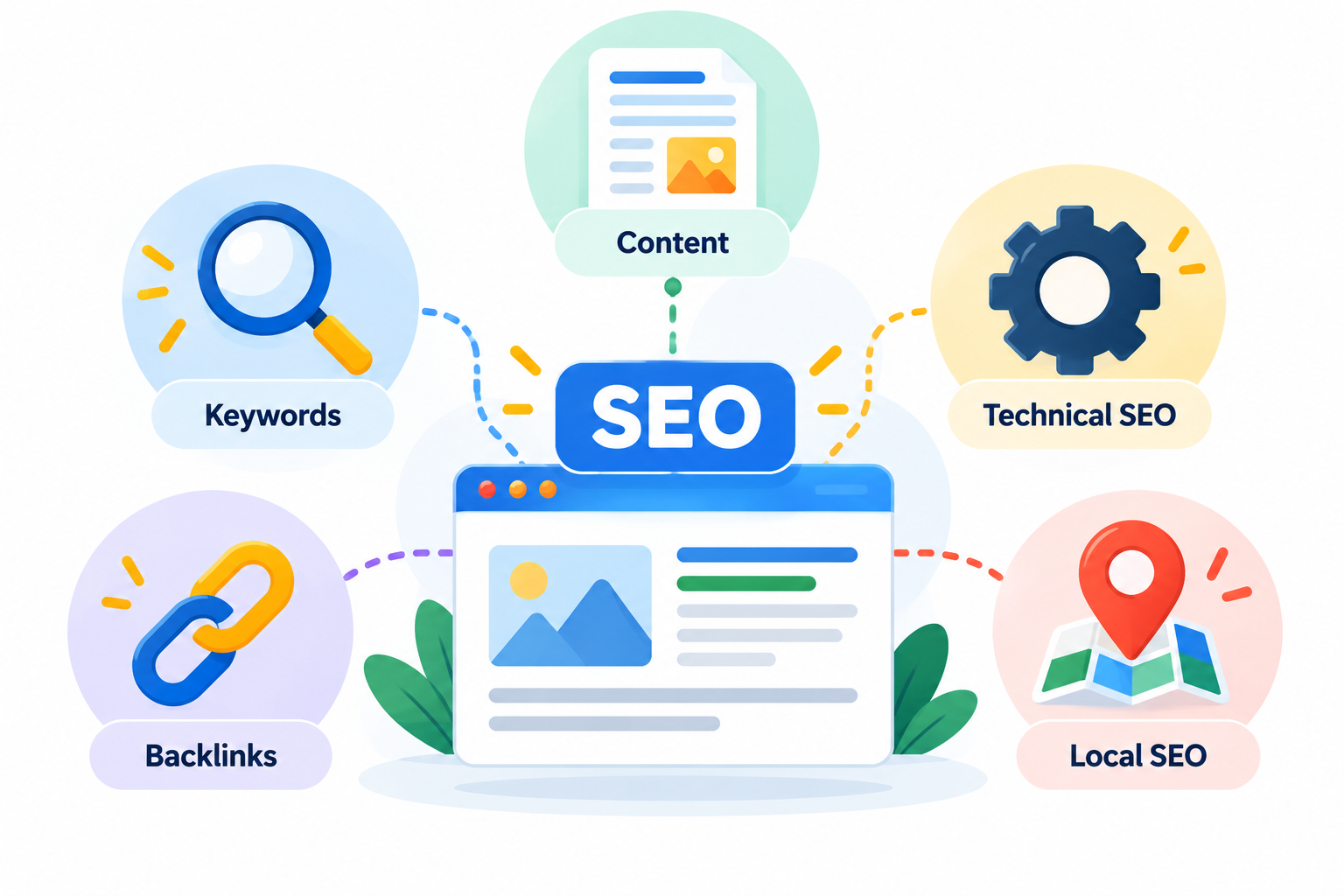
SEO has a few main parts:
- Keyword research: Finding the exact words people type when they look for what you sell. For example, "wedding photographer in Jaipur" is a better target than just "photographer."
- On-page SEO: Making each page clear for both people and Google. This includes a good title, clear headings, helpful text, and descriptions for your images.
- Content: Writing blog posts, guides, and service pages that answer real questions. A dentist might write "How much does a root canal cost?" because many patients search for exactly that.
- Technical SEO: Making sure your site loads fast, works well on mobile, and has no broken pages. Think of it as keeping your shop clean and the doors working.
- Backlinks: Links from other trusted websites to yours. They work like recommendations. If many good sites point to you, Google trusts you more.
- Local SEO: Helping nearby customers find you. This includes a complete Google Business Profile, correct address and phone number, and customer reviews.
 The honest truth about SEO is that it takes time. Most websites need a few months before they see steady results. But once a page ranks well, it can bring visitors for a long time without paying for each click.
How Paid Advertising Works and Where to Run It
Paid advertising means you pay to show your message to people online. The most common model is PPC (pay-per-click). You only pay when someone clicks your ad. The price of one click is called CPC (cost per click).
Here are the main places to run ads:
- Google Ads: Your ad appears at the top of search results when someone searches for something you sell. These people are already looking, so they are often ready to buy. A plumber running an ad for "emergency pipe repair near me" is a good example.
- Meta Ads (Facebook and Instagram): You show ads to people based on their age, location, and interests. These people are not searching for you yet, but you can introduce yourself. A new clothing brand can show photos of its collection to women aged 22–35 in nearby cities.
- YouTube Ads: Short video ads before or during videos. Good for products that need a little explaining.
- LinkedIn Ads: Useful when you sell to other businesses, because you can target job titles and company types.
A paid campaign has a few key pieces. You choose your audience, set a daily budget, write the ad, and send people to a landing page. A landing page is a single page built for one goal, such as booking a call or buying a product. A good ad sent to a weak landing page wastes money. This is one of the most common mistakes beginners make.
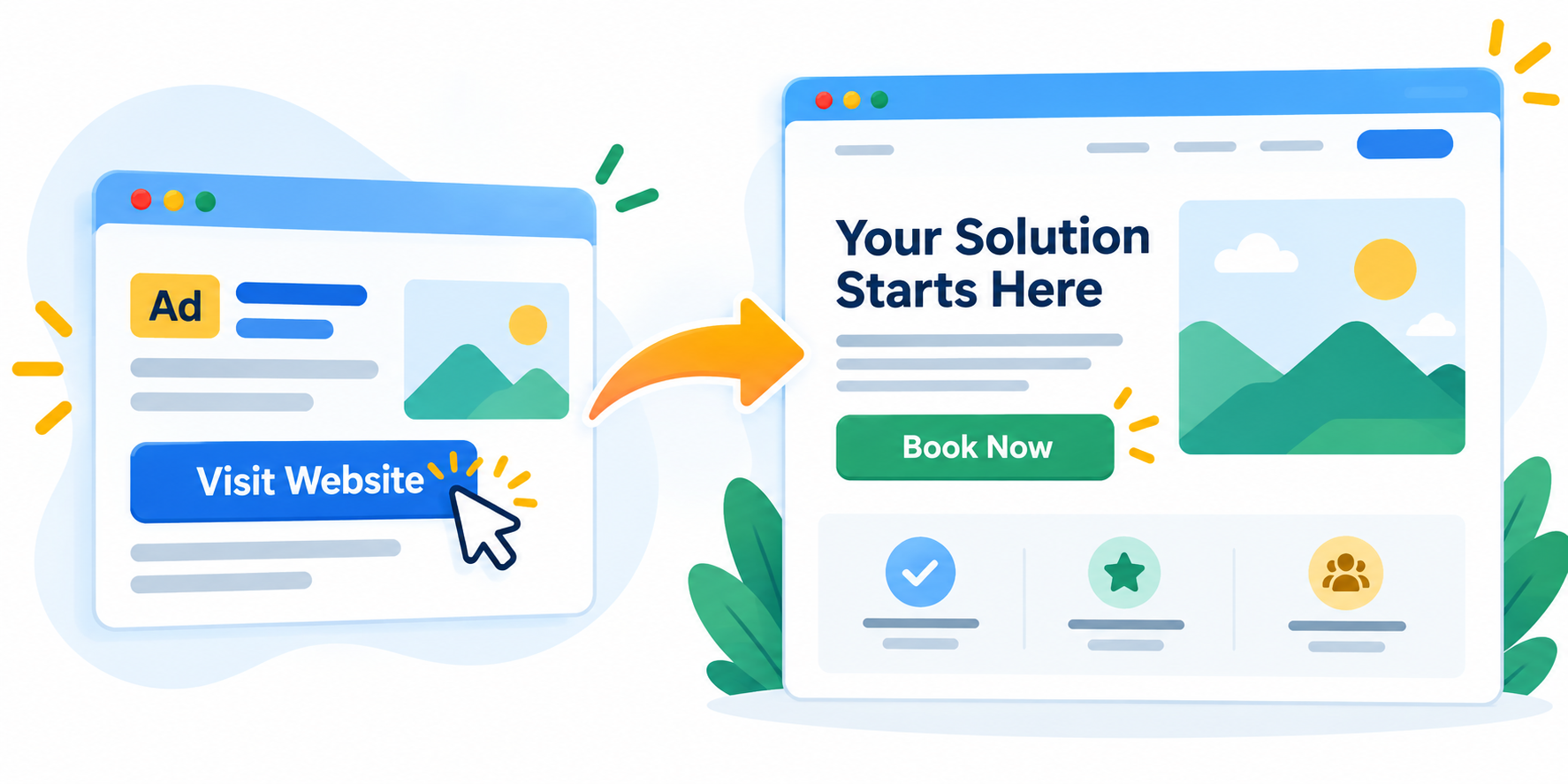
The big advantage of paid ads is speed. You can launch today and get visitors today. The downside is that when you stop paying, the visitors stop too.
SEO vs Paid Advertising: Which One Do You Need?
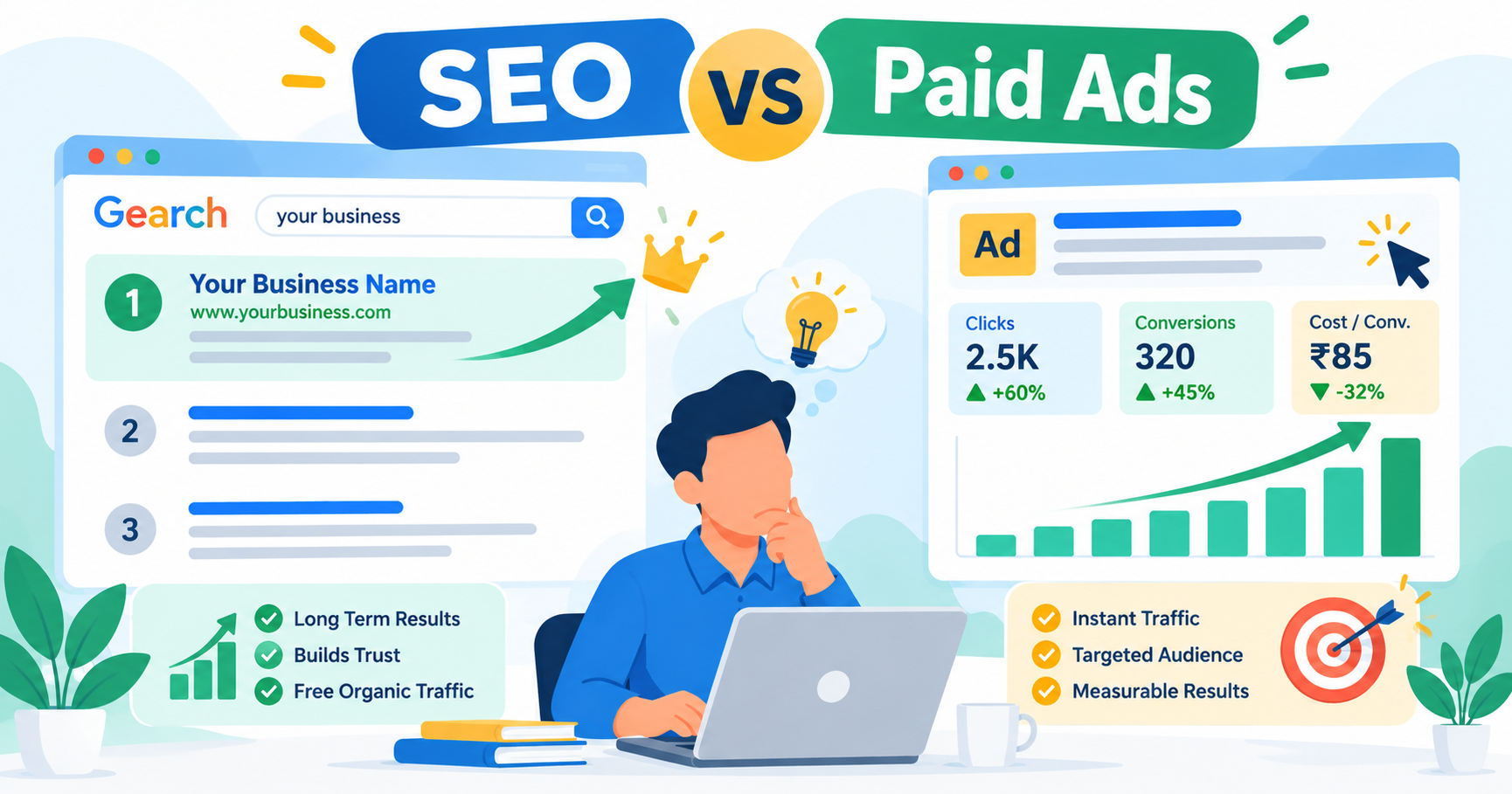
Neither is "better" in every case. They solve different problems. Here is a quick comparison:
| SEO | Paid Advertising | |
|---|---|---|
| Speed | Slow. Often takes a few months. | Fast. Can start the same day. |
| Cost | Costs time and effort up front. No fee per click. | You pay for every click or view. |
| Lasting effect | Keeps working long after the work is done. | Stops when your budget stops. |
| Control | Less control. Google decides rankings. | More control over who sees your ad and when. |
| Best for | Long-term growth and steady traffic. | Quick launches, offers, and testing ideas. |
A simple way to think about it: SEO is like building a house. It takes time, but you own it. Paid ads are like renting a hotel room. It is ready right away, but you pay every night.
Here is how this looks in real life:
- A new coaching institute opening next month has no time to wait for SEO. It runs Google and Meta ads to fill its first batch.
- An established furniture store has a blog and product pages that already rank. It uses SEO for steady traffic and adds ads only during festival sales.
- A software company selling to other businesses uses SEO blog posts to build trust and LinkedIn ads to reach decision makers.
Why Tracking and Follow-Up Decide Your Results
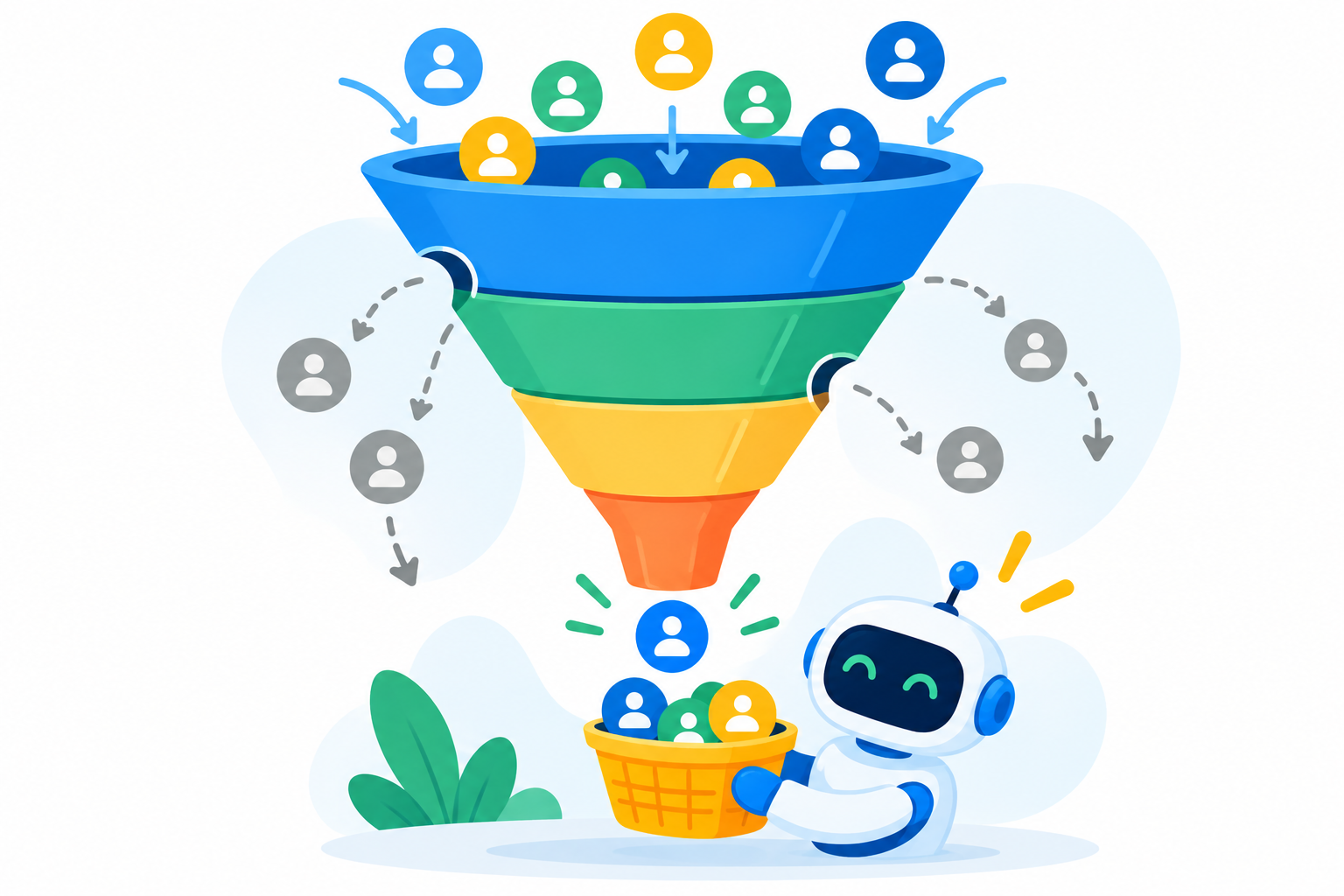
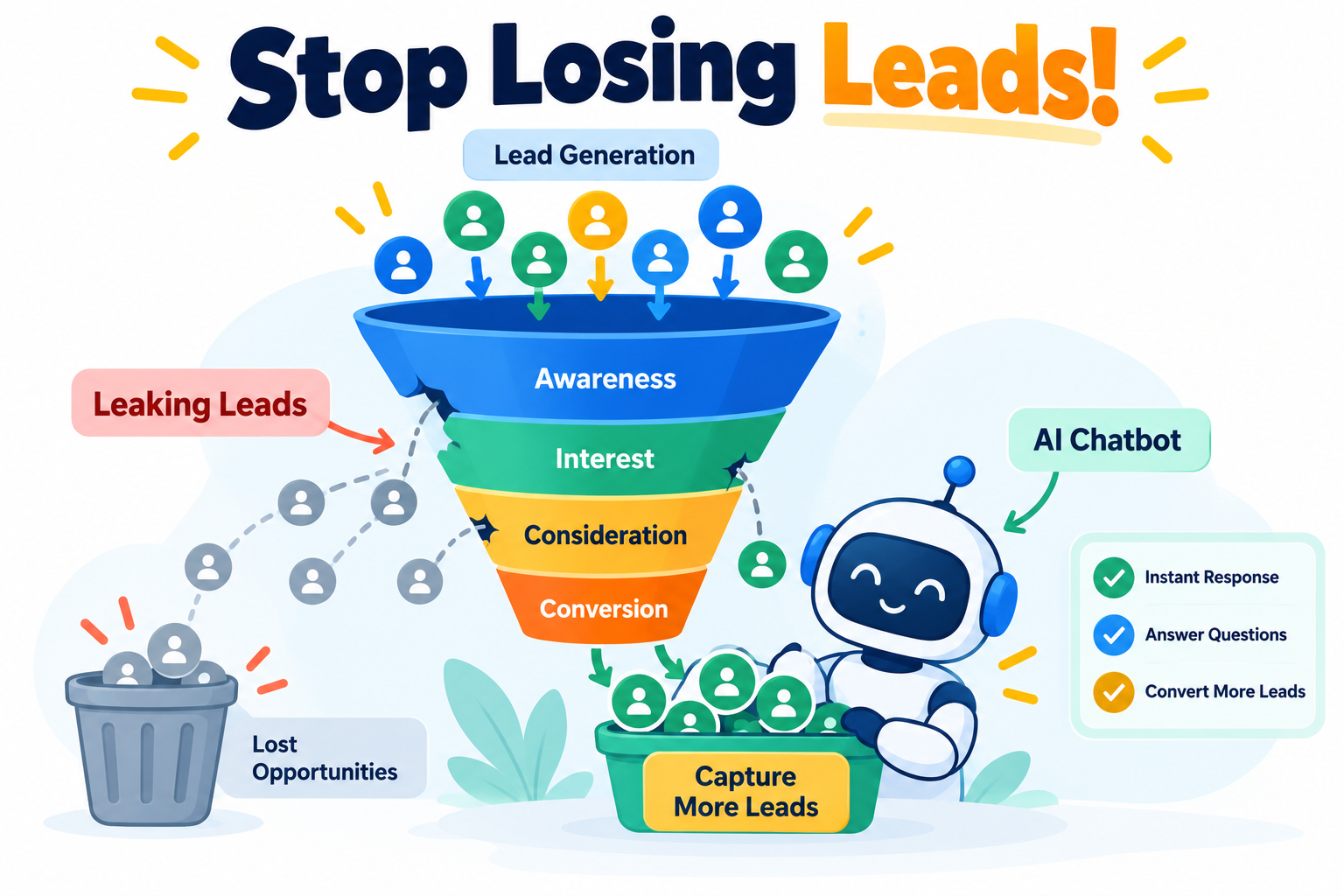
Getting clicks is only half the job. Many businesses spend money on ads and SEO, then lose most of their leads afterward. Here is how it usually happens:
- A visitor fills a form, but nobody replies for two days. By then, they have chosen someone else.
- Leads sit in an email inbox or a messy spreadsheet and get forgotten.
- The business cannot tell which ad or blog post brought each customer, so it does not know what to repeat.
This is a real problem, and it is more technical than it looks. You need to capture leads quickly, reply fast, and connect each lead to its source. Doing this by hand is slow. Doing it with the wrong setup can break silently, so you lose leads without knowing.
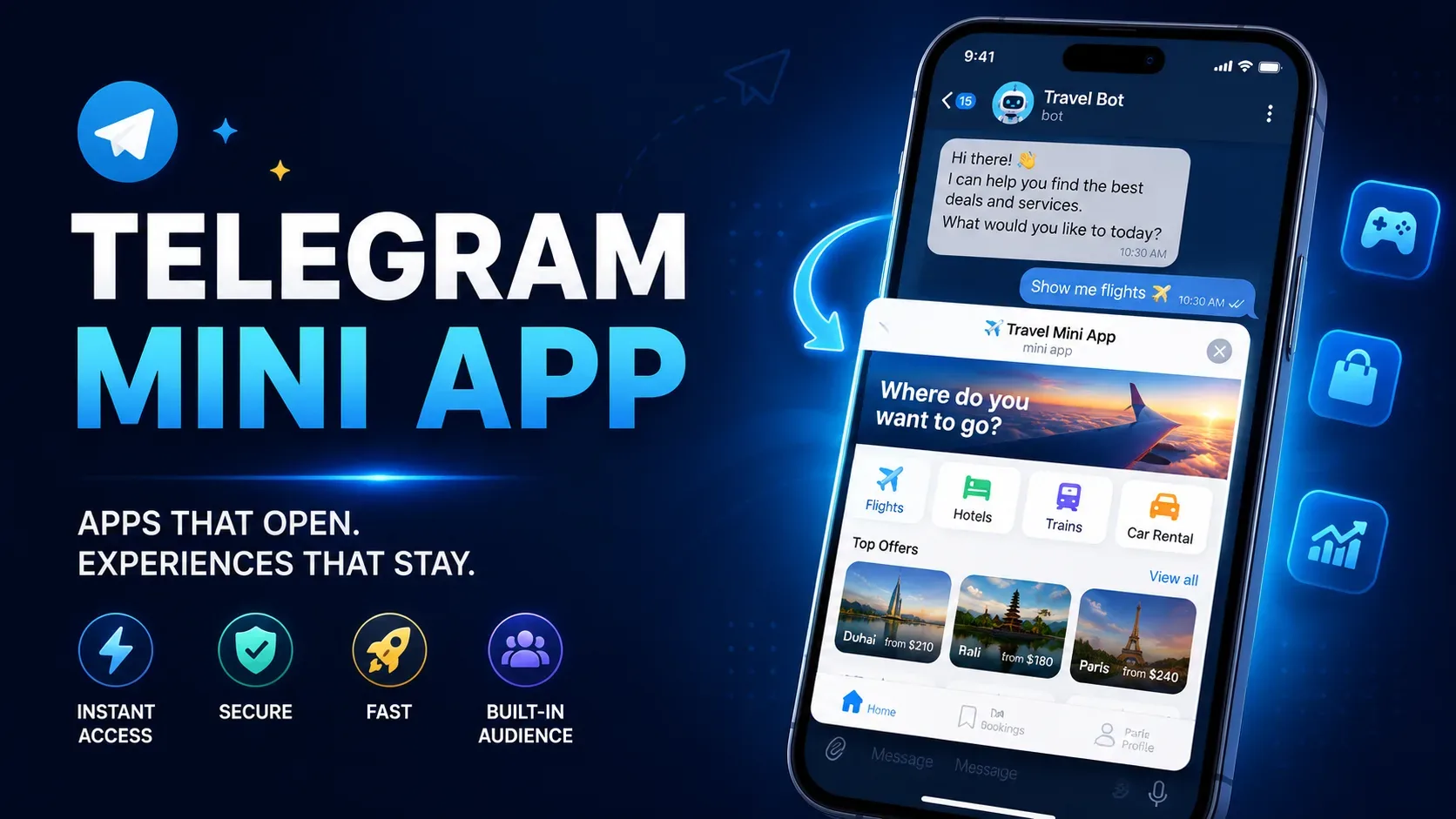
Many businesses fix this with automation. For example, a Telegram bot can greet a new lead within seconds, ask a few questions, and send the details to your team. A custom web app can show you which campaigns bring paying customers, not just clicks. At Earning Planet IT Services, we build Telegram bots, Telegram Mini Apps, and custom web apps for this kind of work. If your leads are slipping through the cracks, a properly built system is often a better fix than spending more on ads.
How to Use SEO and Paid Ads Together
The strongest results usually come when both work as a team. Here is how they help each other:
- Use ads to test, then use SEO to grow. Run a small ad campaign with a few keywords. See which ones bring real customers. Then write blog posts and pages around those winning keywords.
- Use SEO data to improve ads. Pages that rank well show you what people care about. Use the same words in your ad text.
- Take up more space on the results page. If you appear both as an ad and as a normal result, people notice you more and trust you more.
- Retarget visitors. Retargeting means showing ads to people who already visited your site but did not buy. Your SEO brings them in. Your ads gently remind them to come back.
Here is a simple example. A home-baking business starts with a small Instagram ad budget to promote custom cakes. After a month, it sees that "eggless birthday cake" gets the most orders. It then writes a blog post and a service page for that exact phrase. Over the next few months, the page starts to rank. The business can now lower its ad spend on that keyword and still keep getting orders.
A Simple Plan to Get Started
You do not need a huge budget or a big team. Start small and keep it clear:
- Set one clear goal. For example, "20 enquiries per month." A goal helps you judge what is working.
- Fix your website basics first. Make sure it loads fast, looks good on mobile, and clearly says what you offer and how to contact you.
- Set up tracking. Install Google Analytics and track actions like form fills, calls, and purchases.
- Start with a few keywords. Pick 5–10 phrases that show strong buying intent, like "buy," "price," "near me," or "service."
- Create helpful content. Publish one or two good pages or posts each month that answer real customer questions.
- Run a small test campaign. Start with a modest daily budget. Watch the results for two to four weeks before you change much.
- Review every month. Keep what works. Stop what does not. Repeat.
Common Mistakes to Avoid
- Expecting SEO to work in a week. It rarely does. Be patient and keep improving.
- Spending on ads without a good landing page. Visitors leave quickly if the page is confusing or slow.
- Targeting words that are too broad. "Shoes" is expensive and vague. "Women's running shoes size 7" is cheaper and more focused.
- Ignoring mobile users. Most people browse on their phones. If your site is hard to use on mobile, you lose customers.
- Not tracking results. Without data, you are guessing. Always know what each rupee is bringing back.
- Copying content or buying shady backlinks. These shortcuts can hurt your rankings. Google is good at spotting them.
Frequently Asked Questions
How long does SEO take to show results? It depends on your competition and your site's current state. Many sites start to see movement in about three to six months. Some take longer.
Is SEO or paid advertising cheaper? SEO has no fee per click, but it needs time and good content. Ads cost money with every click. Over a long time, SEO is often cheaper per customer. For a quick start, ads are easier to control.
Can a small business do SEO without an agency? Yes, the basics are doable. Fix your website, write helpful content, and set up your Google Business Profile. Technical issues can be harder, and that is where expert help may save time.
How much should I spend on ads? Start small. Pick a daily budget you can afford to lose while you learn. Increase it only when you see that the ads bring paying customers.
Do I need both SEO and ads? Not always. A new business may start with ads only. A business with a tight budget may focus on SEO and local search first. Many growing businesses eventually use both.
What is the difference between organic and paid traffic?Organic traffic comes from unpaid search results. Paid traffic comes from ads you pay for.
Final Thoughts
SEO and paid advertising are not rivals. SEO builds long-term trust and steady traffic. Paid ads give you speed and control. Used together, with good tracking and quick follow-up, they can turn a quiet website into a steady source of customers.
If you want a system that captures leads, replies instantly, and shows you what is working, Earning Planet IT Services can help. We build custom Telegram bots, Telegram Mini Apps, and MERN-stack web apps for businesses. Our automation services start from ₹999, with no monthly fees like those of many automation tools. Reach out to us to talk about what fits your business.
Need a Professional Project?
We specialize in MERN Stack, Telegram Bots, and SEO-optimized web solutions. Let's build something amazing together!